Introduction
In manufacturing sectors where precision is non-negotiable, the production of components with deep, narrow holes presents a significant challenge. This is the specific domain of the deep hole drilling machine. Engineered to create holes with depths many times greater than their diameter, these specialized machines are fundamental to industries such as aerospace, automotive, and energy, where component integrity is critical.
Unlike standard drilling equipment, a deep hole drilling machine achieves exceptional accuracy, straightness, and surface finish in deep bores. Applications range from engine cylinders and fuel injectors to hydraulic manifolds and components for oil and gas extraction. The capability to meet such exacting standards consistently makes this technology indispensable.
This article examines the core functionality of these machines, detailing the deep hole drilling machine working principle, the role of specialized deep hole drilling tools, and the advantages offered by advanced setups like the CNC gun drilling machine.
1. What is a Deep Hole Drilling Machine?
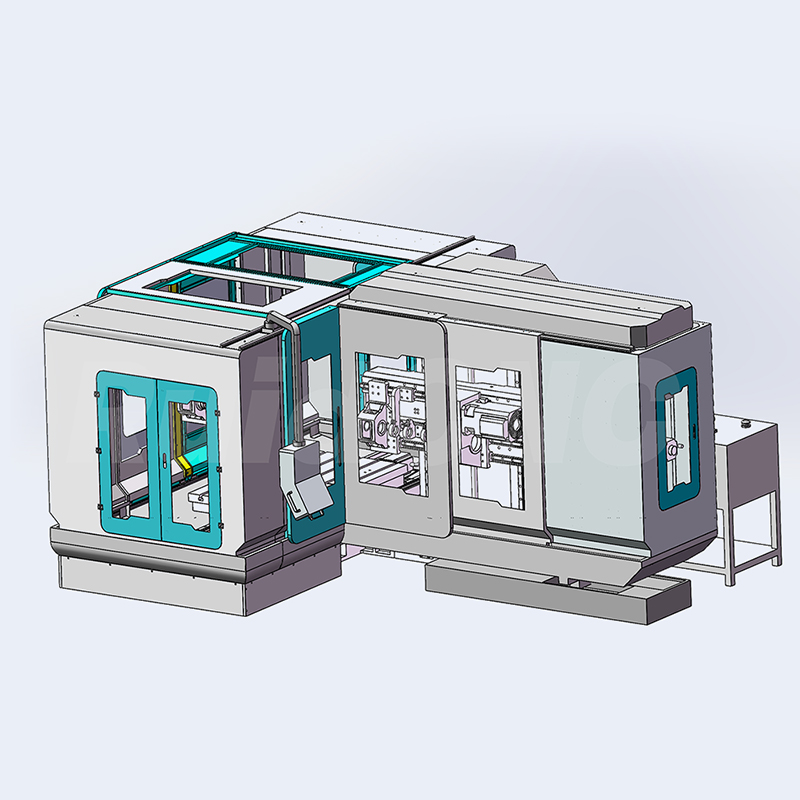
A deep hole drilling machine is a precision machine tool designed exclusively for producing holes with a high depth-to-diameter ratio. While conventional drilling is limited to relatively shallow holes, this technology is built for operations where depth, straightness, and finish are paramount.
Purpose: The primary objective is to generate accurate, straight, and clean deep holes capable of withstanding high pressures and precise fluid dynamics in final applications. This is essential for the functionality and longevity of components in demanding fields.
Common Applications: These machines are predominantly used for drilling into metal workpieces. Typical applications include machining engine blocks, fuel injection nozzles, gearbox shafts, hydraulic cylinder barrels, and spindles. The ability to maintain precision over extended depths makes it a cornerstone of high-performance manufacturing.
2. Deep Hole Drilling Machine Working Principle
The deep hole drilling machine working principle is distinct from conventional drilling, focusing on stability, heat management, and chip evacuation over long distances.
Basic Mechanism: The core of the process often involves a gun drill, a long, slender tool with a single flute. The drill rotates at high speed while high-pressure coolant is forced through an internal channel directly to the cutting edge. This coolant serves three vital functions: lubricating the cut, cooling the tool and workpiece, and evacuating chips backward through the drill’s flute. This system prevents chip packing, reduces friction and heat generation, and ensures hole quality.
CNC Integration: Modern machines frequently incorporate Computer Numerical Control (CNC), leading to the highly automated CNC gun drilling machine. CNC technology translates digital designs into precise machine movements, controlling parameters like spindle speed, feed rate, and depth with extreme accuracy. This automation ensures repeatability, allows for complex multi-step operations, and minimizes human error, which is crucial for high-volume or high-precision production.
Emphasis on Stability and Precision: The machine tool itself is constructed with a robust, rigid frame and precise guiding systems. This stability is critical to counteract any forces that could cause the long, slender drill to deviate, ensuring the hole remains straight and true to its intended axis over its entire depth.

3. Key Features and Tools
Deep hole drilling machines are characterized by several defining features that enable their specialized function.
High-Precision Capabilities: They are designed to hold extremely tight tolerances on diameter, straightness, and surface finish, even at depth-to-diameter ratios of 20:1 or higher.
Specialized Cooling/Lubrication: Integrated high-pressure coolant systems are mandatory, not optional. They are central to the working principle, managing heat and chip removal effectively.
Advanced Tooling: The performance is heavily dependent on specialized deep hole drilling tools. The gun drill is the most common tool for smaller diameters. For larger holes, BTA (Boring and Trepanning Association) or ejector drill systems may be employed, which use a different chip evacuation method. These tools are often made from high-performance materials like carbide and may feature wear-resistant coatings to extend life under demanding conditions.
4. The Role of the CNC Gun Drilling Machine
The integration of CNC elevates the capabilities of a deep hole drilling system. A CNC gun drilling machine represents the pinnacle of precision and efficiency in this field.
Enhanced Precision and Complexity: CNC programming allows for drilling holes at precise angles, creating stepped diameters, and performing related operations in a single setup. This is invaluable for complex parts common in aerospace and medical devices.
Productivity and Consistency: Once programmed, the CNC gun drilling machine can operate continuously with minimal supervision, producing identical parts cycle after cycle. This dramatically increases output and reduces scrap rates compared to manual operations.
Data and Monitoring: Advanced CNC systems can monitor process parameters like spindle load and coolant pressure, providing data for predictive maintenance and ensuring process consistency.
5. Applications Across Industries
The unique capabilities of deep hole drilling machines make them vital across several technology-driven sectors:
- Aerospace: For drilling cooling holes in turbine blades, fuel passages in engine manifolds, and hydraulic ports in landing gear components.
- Automotive: Essential for manufacturing fuel injector nozzles, cylinder head oil galleries, transmission shafts, and shock absorber cylinders.
- Energy: Used for creating flow channels in oil and gas wellhead equipment, heat exchanger tubes, and components for hydraulic turbines.
- Medical: Employed in the production of surgical instruments, implants requiring precise fluid channels, and needles for specialized applications.
- Mold & Die: For drilling efficient cooling channels deep within injection molds to control cycle times and part quality.
6. Conclusion
The deep hole drilling machine is a critical enabler of modern manufacturing, allowing for the production of components that would be impossible or impractical with standard methods. Understanding the deep hole drilling machine working principle—centered on high-pressure coolant, chip evacuation, and extreme rigidity—is key to appreciating its value. The evolution into the CNC gun drilling machine has further enhanced precision, repeatability, and productivity. Coupled with advanced deep hole drilling tools, this technology continues to push the boundaries of what is possible in precision machining, forming the backbone of innovation in the world’s most demanding industries.