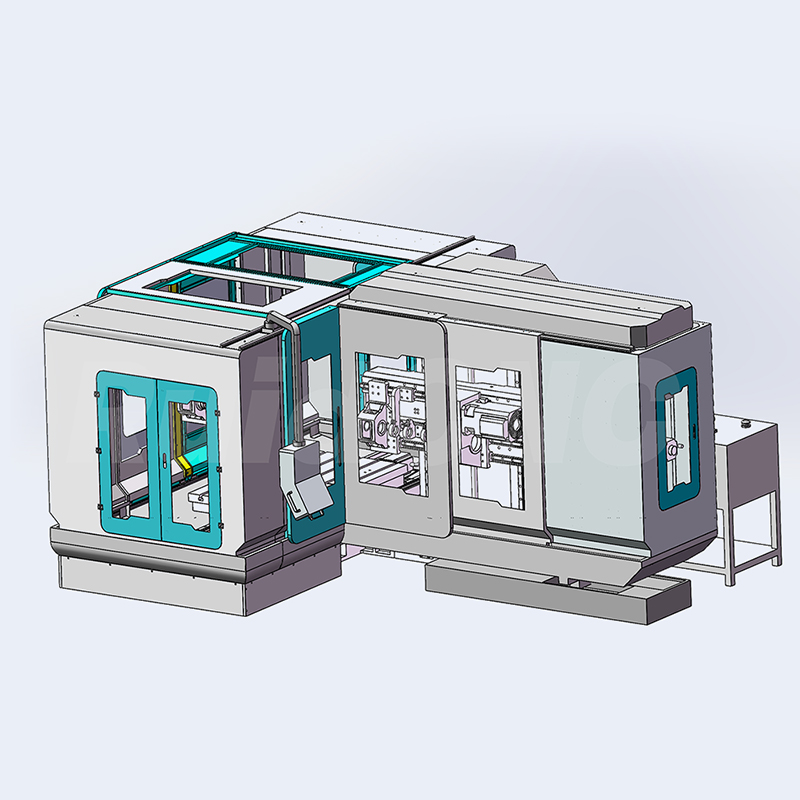
In precision manufacturing, drilling a standard hole is often viewed as a straightforward operation. But when the goal shifts to creating a hole that is 20, 50, or even 200 times deeper than its diameter, the process becomes one of the most demanding disciplines in metal cutting. This specialized field is known as deep hole drilling. Without proper deep hole drilling machine setup, tool selection, and operating techniques, common failures—including tool deflection, excessive heat, and catastrophic chip clogging—can quickly stop production entirely.
To achieve consistent, reliable results, manufacturers must first understand the core tools of the trade: deep hole drill bits and the machines designed to support them. This guide breaks down the major categories of deep hole drilling tools and systems, from the time-tested gun drill to high-production BTA systems, so you can select the right solution for your application.
What Defines a “Deep Hole” in Machining?
In industrial machining, a hole is classified as deep when its depth-to-diameter (D:d) ratio is 10:1 or greater. At this range, standard twist drills are ineffective: they lack internal structures to efficiently remove long, continuous chips. Swarf becomes trapped inside the hole, causing friction, overheating, poor surface finish, and eventual tool breakage.
Specialized deep hole drill bit designs solve this problem through engineered geometries and high-pressure coolant delivery systems that ensure flawless chip evacuation.
| Depth-to-Diameter Ratio | Hole Type | Recommended Drilling Method |
|---|---|---|
| Up to 10:1 | Standard | Conventional twist drill |
| 10:1 to 300:1+ | Deep Hole | Gun drill, BTA, Ejector, DF systems |
The Pioneering Solution: Gun Drilling
The origins of modern deep hole drilling are closely tied to the gun drill. Developed in the early 20th century to produce straight, precise gun barrels, the gun drill established the foundation for precision deep hole machining. Today, it remains central to operations performed on a gun drilling machine.
Design and Mechanism
The gun drill is easily identified by its single V‑shaped flute that runs the full length of the tool. It uses external chip evacuation. High-pressure coolant flows through an internal channel in the drill shank, exits at the cutting tip to lubricate and cool the zone, then pushes chips back along the outer V‑groove and out of the hole.
Ideal Applications
Gun drills specialize in small‑diameter holes, typically from 1 mm to 20 mm. They achieve depth-to-diameter ratios well beyond 300:1 with exceptional straightness and accuracy. Although originally developed for firearms, they are now essential in aerospace for hydraulic valve components and in medical device manufacturing.
The Production Workhorse: BTA Deep Hole Drills
As industries demanded larger holes and faster cycle times, the torque and diameter limitations of gun drilling became clear. This led to the BTA system—named for the Boring and Trepanning Association.
The BTA System Explained
BTA deep hole drills use internal chip evacuation, a fundamentally different approach. The drill head attaches to a rigid drill tube. High-pressure coolant is injected through the annular gap between the tube and the hole wall. This coolant stream pushes chips across the tool face and back through the center of the drill tube for removal.
Processing Range and Performance
BTA systems target larger diameters, generally starting at 20 mm and extending to well over 200 mm. Regarded as the heavy lifters of deep hole drilling, they deliver feed rates three to five times higher than gun drills. This makes them the top choice for high-volume automotive parts, hydraulic cylinders, and oilfield components.
The Hybrid Innovators: Ejector and DF Deep Hole Drills
To improve efficiency and reduce reliance on specialized high-pressure sealing equipment, engineers developed hybrid systems that combine mechanical feed and fluid dynamics.
The Ejector Drill (Double‑Tube System)
Ejector drills use a dual‑tube structure. Roughly two‑thirds of coolant reaches the cutting head to push chips into the inner tube. The remaining third flows through small nozzles, creating a Venturi effect that generates suction. This push‑pull action drastically improves chip removal and allows operation without the complex rotary seals required for BTA.
The DF Deep Hole Drill (Single‑Tube System)
The DF (Double Feeder) system refines this technology further by combining advantages of BTA and ejector designs. It uses a single tube like BTA but integrates the suction effect of ejector drills. Using a specially designed feeder head, it creates a pressure differential to assist chip extraction, boosting efficiency and making it suitable for smaller diameters than traditional ejector setups.

Deep Hole Drill Types Comparison
To help you quickly evaluate and select the right deep hole drill bit for your operation, the following table compares the three most common systems:
| Feature | Gun Drill | BTA Deep Hole Drill | Ejector/DF Drill |
|---|---|---|---|
| Diameter Range | 1 mm – 20 mm | 20 mm – 200 mm+ | 18 mm – 65 mm |
| Chip Evacuation | External V-groove | Internal through drill tube | Internal (assisted by suction) |
| Coolant Path | Through the drill rod, out tip | Between rod and hole wall | Dual tubes (Ejector) or Single tube with booster (DF) |
| Surface Finish (Ra) | 0.4 – 3.2 µm | 0.8 – 3.2 µm | 0.8 – 3.2 µm |
| Key Advantage | Precision in small diameters | High feed rates, large volumes | Efficiency and less stringent sealing requirements |
Summary
Deep hole drilling is a high-precision, skill-intensive process that relies on specialized equipment: the deep hole drilling machine, purpose-built gun drilling machine, and engineered deep hole drill bit. A hole is defined as deep once its depth-to-diameter ratio exceeds 10:1, where standard drills fail due to poor chip evacuation and instability.
Gun drills excel at small‑diameter, ultra‑deep holes requiring extreme straightness. BTA systems lead in large‑diameter, high‑volume production where rigidity and speed are critical. Ejector and DF drills provide flexible, hybrid solutions that simplify setup while maintaining strong chip removal performance.
Choosing the right drill system based on diameter, depth, material, and production volume reduces tool failure, improves hole quality, extends tool life, and ensures stable, efficient performance in even the most demanding deep hole drilling applications.