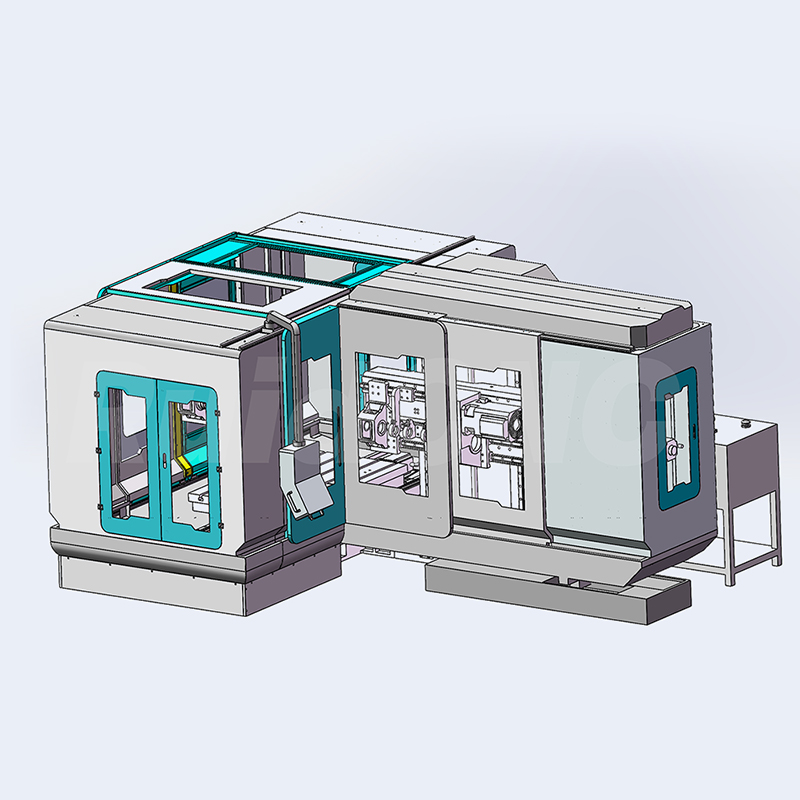
Introduction: What is Deep Hole Drilling?
The Importance of Deep Hole Drilling
Why Specialized Tools Are Needed
1. Understanding Deep Hole Drilling Tools
1.1 Gun Drilling
- High Precision: Gun drills maintain excellent straightness and roundness in deep holes, which is critical for applications like fuel injection and medical implants.
- Minimal Heat Generation: The efficient cooling system helps prevent heat buildup, prolonging tool life and improving the quality of the drilled hole.
- Versatility: Gun drills can be used for both ferrous and non-ferrous materials, including steel, titanium, and certain composites.
1.2 BTA Drilling (Boring, Trepanning, and Association)
- Oil & Gas: BTA drilling is commonly used in oil well drilling, where large, deep holes need to be created in tough geological formations.
- Heavy Machinery: It is also used in manufacturing heavy machinery components such as engine blocks, transmission parts, and hydraulic cylinders.
- Aerospace: Used for drilling holes in larger aerospace parts, including wing spars and engine casings.
- Higher Material Removal Rate: BTA drilling offers faster material removal compared to other drilling methods, making it ideal for high-volume production.
- Larger Hole Diameters: It is well-suited for applications that require larger diameter deep holes.
- Reduced Tool Wear: The coolant system helps prevent overheating, extending the life of the tool.
1.3 Other Specialized Tools for Deep Hole Drilling
-
Trepanning Tools: Trepanning is a cutting technique where a hollow core of material is removed from the workpiece to form a deep hole. The tool is designed with a cutting edge that removes a ring of material, leaving a central core. Trepanning is typically used for drilling larger holes and is ideal for machining thicker materials.
-
Solid Carbide Drill Bits: Solid carbide drill bits are used for drilling extremely hard materials such as titanium alloys and superalloys, which are common in the aerospace and medical industries. These tools offer superior wear resistance and help achieve longer tool life in high-stress applications.
-
Carbide-Tipped Drills: Carbide-tipped drill bits combine the toughness of a steel body with the hardness of carbide, offering enhanced performance when drilling through tougher materials. These drills are commonly used for deep hole drilling in industries where high strength and wear resistance are essential.
-
Diamond-Coated Drills: For extreme wear resistance, especially in abrasive materials, diamond-coated drill bits are used. These bits offer unparalleled durability and precision, making them suitable for machining materials like composites or glass fibers.
1.4 Coolant and Lubrication Systems for Deep Hole Drilling
-
High-pressure Coolant Delivery: Modern deep hole drilling machines often use high-pressure coolant systems that direct coolant through the drill bit. This helps keep the cutting edge cool, reduces friction, and flushes out chips from the hole.
-
Lubrication: In addition to cooling, lubricants help reduce friction between the cutting edge and the material, extending the life of both the tool and the machine.
- Tool Life Extension: Efficient coolant systems help prevent overheating, extending the lifespan of the drill bit.
- Improved Hole Quality: Coolant flushes away chips, ensuring the hole remains clean and preventing material buildup that could affect precision.
- Faster Drilling: Proper cooling allows for faster drilling speeds, improving overall productivity.

2. Deep Hole Drilling Machines: Types and Functionality
2.1 CNC Deep Hole Drilling Machines
-
Automation and Control: CNC deep hole drilling machines are controlled by pre-programmed software that dictates the drilling path, feed rate, spindle speed, and other parameters. This eliminates human error and ensures that each hole is drilled to exact specifications.
-
Multi-Axis Capability: Many CNC deep hole drilling machines feature multi-axis capability, allowing them to drill complex geometries and angles in addition to simple straight holes.
-
Precision and Flexibility: CNC machines can drill holes with exceptional precision, ensuring that the depth-to-diameter ratio is maintained even over long distances. These machines are highly flexible and can be used for a wide range of materials, from metals to composites.
- Aerospace: CNC machines are ideal for creating the deep, precise holes required in turbine blades, aircraft frames, and engine components.
- Automotive: In automotive manufacturing, CNC deep hole drilling machines are used to create holes for fuel injectors, transmission shafts, and other high-precision components.
- Medical Devices: CNC drilling is widely used for making complex holes in medical devices, such as implantable components or surgical tools.
- High Precision: CNC machines allow for exact hole dimensions and tight tolerances, ensuring consistent results.
- Flexibility: These machines can be programmed to handle different sizes, depths, and geometries, making them suitable for a wide range of applications.
- Time Efficiency: CNC automation reduces human intervention and can perform repetitive tasks with high efficiency, leading to faster production times.
2.2 Traditional Deep Hole Drilling Machines
-
Mechanical Control: Traditional deep hole drilling machines rely on manual controls or simple mechanical systems to adjust the drilling parameters such as feed rate and spindle speed. Although less automated, these machines still provide excellent drilling capabilities for straightforward tasks.
-
Tool and Workpiece Setup: Traditional machines often require manual adjustments for tool setup, workpiece positioning, and alignment. However, they are highly effective for drilling large parts in bulk with simple geometries.
- Heavy Machinery: Traditional machines are often used for creating deep holes in large, heavy components, such as engine blocks, gearbox housings, and hydraulic cylinders.
- Low Complexity Production: For parts that require less precision or are produced in large quantities, traditional machines can deliver cost-effective solutions.
- Cost-Effective: These machines are often less expensive than their CNC counterparts, making them a viable option for basic drilling operations.
- Simplicity: Traditional machines are easier to operate and set up, making them suitable for applications where high precision is not as critical.
- High-Speed Production: In applications requiring high-speed drilling of relatively simple holes, traditional machines are often faster than CNC machines.
2.3 Hybrid Deep Hole Drilling Machines
-
Combination of Manual and Automated Features: Hybrid machines use CNC controls for precision drilling but incorporate manual setup adjustments for quick changes between different jobs or batch productions.
-
Customizable Settings: Hybrid machines allow operators to set parameters manually for specific tasks but can also be programmed for more complex geometries or high-precision requirements.
-
Improved Efficiency: By combining both automation and manual features, hybrid machines optimize the drilling process for both speed and accuracy.
- Medium-Volume Production: Hybrid machines are well-suited for industries requiring medium-volume production, such as automotive or industrial manufacturing.
- Versatile Drilling: These machines are ideal for applications that require both simple, high-speed drilling and more complex, high-precision drilling.
- Balanced Precision and Speed: Hybrid machines offer a balance between high precision and fast production speeds, making them ideal for various tasks.
- Cost-Effective: They provide a good balance between the cost of traditional machines and the capabilities of CNC machines, making them a cost-effective choice for businesses.
- Flexibility: Hybrid machines can handle both simple and complex drilling tasks, making them suitable for companies with diverse product lines.
2.4 Choosing the Right Deep Hole Drilling Machine for Your Needs
- Hole Size and Depth: Machines with CNC controls are generally better suited for drilling precise, deep holes, while traditional machines may suffice for simpler tasks.
- Production Volume: For high-volume, simple drilling tasks, traditional or hybrid machines may be more cost-effective. For low-volume, high-precision work, CNC machines are typically the better choice.
- Material Type: Some materials require specialized machines or cutting tools. For example, titanium and composites often require machines with advanced cooling and cutting capabilities.
Conclusion
Deep hole drilling is a highly specialized process critical to industries such as aerospace, automotive, medical, and energy. The evolution of technologies like CNC machines and advanced tooling has significantly enhanced the precision, material flexibility, and efficiency of the process. These advancements enable the machining of complex components from a wide range of materials while meeting stringent tolerances and improving overall productivity.
The industry has successfully addressed traditional challenges—including tool wear, heat generation, and chip removal—through innovations such as high-pressure coolant systems, laser-assisted drilling, and predictive maintenance. These solutions ensure greater reliability and consistency in operations, allowing for the production of essential parts like fuel injectors, turbine blades, and medical implants with high accuracy.
As demand for more sophisticated components grows, the future of deep hole drilling will be shaped by further technological progress and automation. To remain competitive, manufacturers must continue to adopt advanced machinery, invest in specialized tooling, and embrace ongoing innovation. This commitment will ensure deep hole drilling remains a cornerstone of modern manufacturing, capable of meeting the evolving needs of a complex industrial landscape.