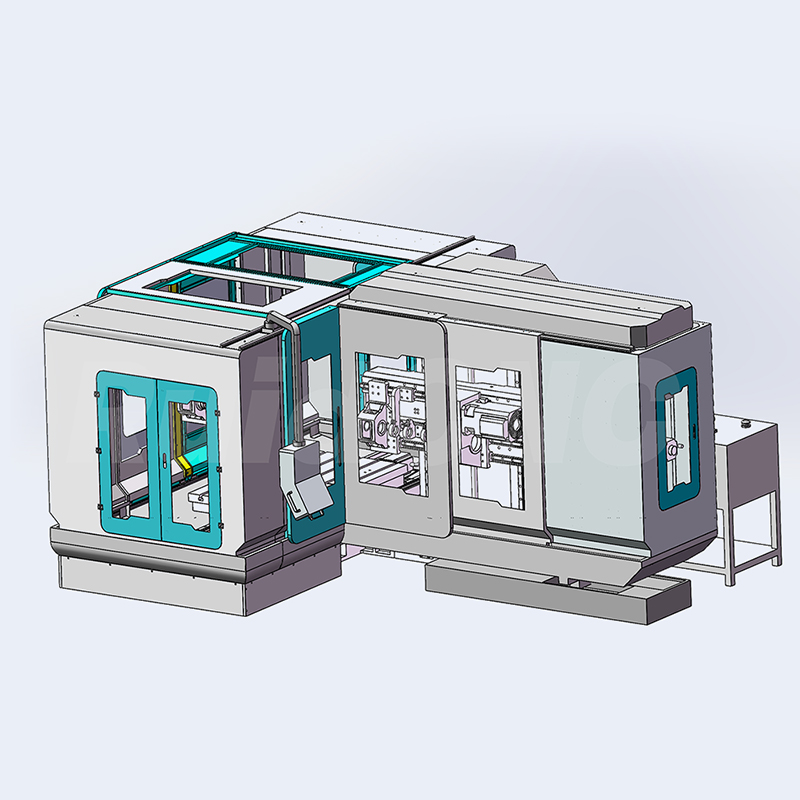
Introduction
Overview of CNC Deep Hole Drilling
In modern industry, precision manufacturing is of utmost importance, and CNC (Computer Numerical Control) deep hole drilling plays a pivotal role in this regard. It is an advanced machining process designed to create highly precise, long, and narrow holes in various materials. When the length – to – diameter ratio of a hole exceeds 10:1, it enters the realm of “deep” holes, and this is where CNC deep hole drilling truly shines.
This technology is indispensable in industries such as aerospace, automotive, and oil & gas. In the aerospace industry, components need to withstand extreme conditions, and thus, the precision and durability of parts are non – negotiable. In the automotive industry, engine performance depends on the quality of holes drilled in engine blocks and other parts. The oil & gas industry requires equipment with high – precision holes to operate efficiently in harsh environments.
The ability of
CNC deep hole drilling machines to produce holes with exact specifications makes them a crucial tool in creating complex components. For example, engine parts, turbine blades, and medical devices all demand high – precision holes. These machines offer unrivaled precision, speed, and repeatability, enabling the production of high – performance components that meet the strictest industry standards. In the following sections, we will delve deeper into the technical principles, types of equipment, and key considerations related to CNC deep hole drilling.
What is CNC Deep Hole Drilling?
?
Defining Deep Hole Drilling
Deep hole drilling is a specialized machining process. It is mainly aimed at creating long and narrow holes, where the depth – to – diameter ratio is typically greater than 10:1. This standard of a 10:1 ratio serves as a benchmark to distinguish deep holes from regular ones. For instance, if a hole has a diameter of 5mm, a depth of more than 50mm would classify it as a deep hole.
Unlike traditional drilling, deep hole drilling demands highly specialized equipment, tools, and techniques. Maintaining precision over long distances is one of the greatest challenges. Since the hole is much deeper, any small deviation in the drilling process can accumulate and lead to significant inaccuracies. Sophisticated coolant delivery systems are necessary to ensure that chips are removed effectively and the temperature is controlled. High – speed rotation of the drill bit helps in efficient material removal, while specialized tooling is designed to handle the high pressures and forces encountered during deep hole drilling.
Difference Between Regular and Deep Hole Drilling
Precision and Tolerances
In regular drilling, where the depth – to – diameter ratio is low (less than 10:1), the requirements for precision and tolerances are relatively less stringent. Small deviations in the hole’s path or size may not render the part completely unusable. However, in deep hole drilling, precision is of utmost importance. Even the slightest deviation in the hole’s path can be critical, especially in industries like aerospace. For example, in the manufacturing of turbine engines, a misaligned deep hole in a component could disrupt the airflow, leading to reduced efficiency or even engine failure. Tolerances in deep hole drilling often need to be maintained within a few microns to ensure the proper functioning of the final product.
Tooling and Equipment
Standard drills are sufficient for regular drilling operations. These drills are commonly available and can be used in a wide range of applications. However, for deep hole drilling, specialized tools are essential. CNC gun drills are a prime example. They have a single cutting edge and a built – in coolant delivery system. This design allows for efficient chip removal, which is crucial in deep hole drilling to prevent chip clogging that could damage the drill bit or affect the hole’s quality. BTA (Boring and Trepanning Association) drills are another type of specialized tool used for deep hole drilling, especially for larger diameter holes.
Coolant Systems
In regular drilling, the coolant system is relatively simple. Its main function is to cool the drill bit and flush away chips. But in deep hole drilling, the coolant system is much more complex. The coolant must reach deep into the hole to effectively remove chips and control the temperature. In deep hole drilling, the coolant has to travel a long distance through a narrow passage. Specialized coolant delivery methods, such as internal coolant channels in the drill bit (as seen in CNC gun drills), are used to ensure that the coolant can reach the cutting edge without disrupting the machining process. This is in contrast to standard drilling, where the coolant can be applied more straightforwardly from the outside.
Common Types of CNC Deep Hole Drilling Machines
CNC Gun Drilling Machines
CNC gun drilling machines are highly renowned in the field of deep hole drilling. These machines are engineered to achieve an exceptionally high degree of accuracy, making them the go – to choice for working with materials like stainless steel, titanium, and superalloys.
The “gun drill” itself is a uniquely designed tool. It features a single cutting edge, which allows for precise material removal. What sets it apart is the integrated coolant delivery system within the drill. This design is crucial as it ensures that chips generated during the drilling process are continuously flushed out of the hole. By preventing chip clogging, it not only improves the surface finish of the hole but also prolongs the lifespan of the drill bit.
In terms of applications, CNC gun drills are extensively used in the aerospace industry for manufacturing turbine components. These components need to operate under extreme conditions, and the high – precision holes drilled by gun drills ensure optimal performance. In the medical device industry, gun drills are used to create small, precise holes in components such as surgical implants. The automotive industry also benefits from gun drills, especially in the production of engine blocks, where precision holes are essential for the proper functioning of the engine.
CNC BTA Drilling Machines
BTA (Boring and Trepanning Association) drilling machines are another prevalent type of deep hole drilling equipment. The key advantage of BTA drilling lies in its effectiveness for creating larger diameter holes. When drilling deep and wide holes, the BTA tool enables continuous chip removal, which is vital for maintaining the integrity of the hole and the efficiency of the drilling process.
Unlike gun drills that are more suitable for smaller diameters, BTA machines are designed for applications that demand larger bore sizes, sometimes reaching several inches in diameter. In the energy industry, for example, deep, large – diameter holes are often required. During oil and gas exploration, BTA drilling machines are used to drill holes in drill pipes and casings. These components need to withstand high pressures and harsh environments, and the precision provided by BTA drilling ensures their reliability. BTA drills are also used in the production of heavy – duty hydraulic components, where large – diameter holes are necessary for the proper flow of hydraulic fluids.
CNC Electro – Discharge Machining (EDM) for Deep Holes
Electro – Discharge Machining (EDM) represents a non – traditional approach to deep hole drilling. This method is particularly well – suited for creating deep holes in extremely hard or difficult – to – machine materials. The principle behind EDM deep hole drilling involves using electrical discharges, or sparks, to erode material from a workpiece.
The process is highly precise, capable of achieving very tight tolerances. However, it is generally slower compared to traditional drilling methods. Despite its slower speed, EDM is the preferred choice for drilling extremely small diameter holes, often under 1mm. In the aerospace industry, EDM is used to create fuel injector holes and nozzle holes, where the precision of the hole diameter is critical for the efficient combustion of fuel. In the medical device manufacturing industry, EDM is utilized for applications such as precision medical implants. The ability to create small, accurate holes in biocompatible materials makes EDM an invaluable tool in this field.
CNC Pechlat Drilling Machines
CNC Pechlat drilling machines are specialized equipment designed for creating deep holes in small to medium – sized components. These machines are highly regarded for their precision. They can drill very straight and clean holes in tough materials like steel, stainless steel, and certain alloys.
One of the unique features of Pechlat drilling machines is their flexibility, especially when dealing with shorter workpieces. This makes them suitable for a variety of applications where fine tolerances are required for small, intricate components. In the precision machinery industry, Pechlat drilling is used to create holes in components that need to fit together precisely. In the production of hydraulic parts, the ability to drill accurate holes ensures the proper functioning of the hydraulic systems. The tool – making industry also benefits from Pechlat drilling machines, as they can create the precise holes needed in cutting tools.
CNC Spindle Drilling Machines
CNC spindle – driven machines offer a high level of versatility in deep hole drilling. These machines are designed to accommodate a variety of tools, including those used for gun drilling and BTA drilling. This adaptability allows them to be used in different types of deep hole applications.
CNC spindles provide precise control over feed rates, speeds, and depths. This level of control is crucial for ensuring the accuracy of the drilled holes. In the automotive industry, CNC spindle drills are used to create holes in engine components, transmission parts, and other critical elements. The ability to use different tools and adjust the drilling parameters makes these machines suitable for a wide range of hole sizes and depths. In the aerospace industry, where components often have complex geometries and require holes of varying sizes and depths, CNC spindle drills play a vital role in ensuring the precision and quality of the final products.
CNC Gun Drill vs. CNC Hole Drill
Comparison of CNC Gun Drilling and CNC Hole Drilling Techniques
Tool Design
CNC gun drills are characterized by their single cutting edge, which enables precise material removal in a specific direction. This design is crucial for creating holes with high accuracy, especially in deep hole drilling applications. Additionally, they have an integrated coolant delivery system within the drill itself. This internal coolant channel ensures that coolant can be directly delivered to the cutting edge. By doing so, it effectively flushes away chips generated during the drilling process. For example, when drilling a deep hole in a titanium alloy workpiece, the coolant in a gun drill can continuously remove chips, preventing them from accumulating and causing damage to the drill bit or affecting the hole’s quality.
On the other hand, CNC hole drills typically have multiple cutting edges. This design allows them to remove material more quickly in some cases, as multiple edges are working simultaneously. However, when it comes to deep hole drilling, the presence of multiple cutting edges can make chip removal more challenging. Since there is no dedicated internal coolant delivery system like in gun drills, chips may not be efficiently removed from deeper holes, leading to potential clogging issues.
Precision
CNC gun drilling is renowned for its high precision, particularly when dealing with small diameter holes and significant depths. The single – cutting – edge design, combined with the precise coolant delivery, enables gun drills to maintain a consistent drilling path. This results in holes with very tight tolerances, often within a few microns. For instance, in the manufacturing of fuel injectors, where holes with a small diameter (e.g., less than 1mm) and high depth – to – diameter ratios are required, CNC gun drills can achieve the necessary precision to ensure proper fuel atomization and engine performance.
CNC hole drilling, while suitable for a wide range of applications, is more effective for larger diameter, shorter holes. When the hole depth increases, the lack of a specialized design for chip removal and the presence of multiple cutting edges can lead to a deviation in the hole’s path. As a result, the precision may not be as high as that of gun drilling, especially for very deep holes. For larger diameter holes that do not require extreme precision in depth, hole drills can be a more cost – effective and efficient choice.
Applications
CNC gun drilling is highly favored in applications where high precision and small diameters are of utmost importance. In the aerospace industry, it is used to create holes in turbine blades for cooling channels. These holes need to be precisely drilled to ensure the efficient cooling of the blades during high – speed operation. In the medical device manufacturing industry, gun drills are used to drill holes in surgical implants. The high precision of gun drilling ensures that the implants fit properly and function effectively in the human body.
CNC hole drilling, on the other hand, is more commonly used for general – purpose applications. It can handle a broader range of hole sizes, making it suitable for applications where the focus is not on extreme precision in small – diameter, deep holes. For example, in the construction industry, hole drills may be used to create holes in building materials for fasteners or plumbing installations. In the manufacturing of some consumer products, such as furniture, hole drills can quickly create holes for assembly purposes.
Advantages and Disadvantages
CNC Gun Drilling
Advantages:
-
High Precision: As mentioned above, gun drills can achieve extremely high precision, making them ideal for applications where tight tolerances are required. This precision is crucial in industries like aerospace and medical device manufacturing.
-
Better Surface Finishes: The efficient chip removal system in gun drills, along with the single – cutting – edge design, results in a smooth surface finish of the drilled hole. This is beneficial for components where surface quality affects performance, such as in hydraulic systems.
-
Efficient Chip Removal: The integrated coolant delivery system in gun drills ensures that chips are continuously flushed out of the hole. This not only improves the surface finish but also prolongs the life of the drill bit by preventing chip – related damage.
-
Ideal for Small Diameter Holes: Gun drills are specifically designed to handle small diameter holes with high depth – to – diameter ratios, making them the go – to choice for applications that require such holes.
Disadvantages:
-
Less Suited for Larger Diameter Holes: The design of gun drills, optimized for small diameter holes, makes them less efficient when it comes to drilling larger diameter holes. Drilling larger holes with gun drills may require multiple passes or larger – sized gun drills, which can be time – consuming and costly.
-
Slower for Larger Depths: In some cases, especially when drilling very deep holes, gun drills can be relatively slow. This is because they are designed to maintain high precision, and the process of precise chip removal and controlled drilling can limit the speed at which the hole can be drilled.
CNC Hole Drilling
Advantages:
-
More Versatile: CNC hole drills can handle a wider variety of hole sizes, making them suitable for a broader range of applications. They can be used for both small and large diameter holes, although their precision may vary depending on the hole size and depth.
-
Capable of Drilling a Variety of Hole Sizes: With the use of different drill bits, hole drills can create holes with diameters ranging from small to relatively large. This flexibility is useful in industries where different hole sizes are required for different components or operations.
-
Faster for Larger Holes: When drilling larger diameter holes, hole drills can be faster than gun drills. The multiple – cutting – edge design allows for more rapid material removal, which is an advantage when time is a crucial factor in the manufacturing process.
Disadvantages:
-
Less Precise for Very Small Diameters or Deep Holes: As the diameter of the hole decreases or the depth increases, the precision of hole drills may suffer. The lack of a specialized design for deep hole drilling and small – diameter hole drilling, compared to gun drills, can lead to inaccuracies in the hole’s size, shape, and straightness.
-
Chip Removal Challenges in Deep Holes: In deep hole drilling, the multiple – cutting – edge design of hole drills and the absence of an efficient internal coolant delivery system can make chip removal difficult. This can result in chip clogging, which may damage the drill bit or affect the quality of the hole.
Key Considerations When Choosing a CNC Deep Hole Drilling Machine
When it comes to selecting a CNC deep hole drilling machine, multiple factors need to be carefully evaluated. These considerations play a crucial role in ensuring the machine can meet the specific requirements of different applications, in terms of both performance and cost – effectiveness.
Material Types
The type of material to be drilled is a fundamental factor. Different materials have distinct mechanical properties, which demand different drilling techniques and equipment.
-
Soft Materials (e.g., Aluminum, Copper): Soft materials like aluminum and copper are relatively easy to machine. For these materials, standard CNC hole drilling machines or gun drills can usually get the job done. Their relatively low hardness allows for faster drilling speeds and less wear on the drill bits. For example, in the manufacturing of some aluminum – alloy components in the automotive industry, standard CNC hole drills can quickly create the necessary holes with satisfactory precision.
-
Hard Materials (e.g., Stainless Steel, Titanium, Superalloys): Hard materials such as stainless steel, titanium, and superalloys pose more challenges. These materials have high strength and toughness, which can cause significant tool wear during drilling. For high – precision applications involving these hard materials, especially when dealing with tight tolerances or very deep holes, CNC gun drilling or EDM (Electro – Discharge Machining) may be required. CNC gun drills with specialized tooling can better withstand the high forces and heat generated when drilling hard materials. EDM, on the other hand, can be used to create holes in materials that are difficult to machine using traditional methods. In the aerospace industry, when drilling holes in titanium alloy components for turbine engines, either CNC gun drills or EDM might be employed to ensure the accuracy and integrity of the holes. Additionally, for hard – to – machine materials, specialized coolant systems are often necessary. These coolants are designed to effectively dissipate heat, reducing the risk of overheating the drill bit and the workpiece. High – quality cutting tools made from advanced materials, such as carbide – tipped or diamond – coated drill bits, are also essential to maintain the tool’s longevity and ensure accurate drilling.
Hole Dimensions
The dimensions of the hole, specifically its depth and diameter, are critical in determining the appropriate CNC deep hole drilling machine.
-
Small Diameter, Deep Holes: For applications that require small diameter, deep holes, such as in the production of fuel injectors, medical devices, or precision components, CNC gun drills are the ideal choice. Gun drills are engineered to handle high length – to – diameter ratios, often exceeding 20:1. Their design, with a single cutting edge and integrated coolant channels, enables them to create small, precise holes with a high degree of accuracy. In the manufacturing of fuel injectors for engines, gun drills can drill holes with diameters as small as a fraction of a millimeter and depths several times the diameter, ensuring proper fuel atomization for efficient combustion.
-
Larger Diameter Holes: When it comes to larger diameter holes with significant depths, BTA drilling machines are more suitable. BTA drilling is well – known for its ability to drill large – diameter holes while maintaining precision over long lengths. In the energy industry, for example, when drilling holes in drill pipes or casings for oil and gas extraction, BTA drilling machines can create holes with diameters ranging from several inches to even larger. The continuous chip removal mechanism of BTA drills ensures that the drilling process remains efficient and the hole quality is maintained, even for very deep holes. The machine’s ability to consistently produce holes within the required tolerances is of utmost importance. Any deviation from the specified dimensions can lead to issues in the final assembly or performance of the component. In the automotive industry, if the holes in engine components are not drilled to the correct diameter and depth, it can result in problems such as oil leakage or improper functioning of the engine’s lubrication system.
Speed and Efficiency
Speed is a significant consideration, particularly in high – volume production environments. However, there is always a trade – off between speed and precision.
-
CNC Gun Drills: Gun drills, for instance, may take longer to complete a deep hole due to their focus on maintaining high precision. The process of efficient chip removal and the need to control the drilling path precisely limit their speed. But they offer superior surface finishes and higher accuracy. In applications where surface quality and precision are critical, such as in the aerospace industry for turbine blade manufacturing, the slower speed of gun drills is acceptable because the high – quality holes they produce are essential for the component’s performance.
-
BTA Drills or Spindle – Driven Machines: BTA drills or spindle – driven machines may be faster in some cases. BTA drills, with their larger cutting tools and more efficient chip – removal mechanisms for larger holes, can complete the drilling process more quickly for larger diameter holes. Spindle – driven machines, which can accommodate different types of tools, also offer flexibility in terms of speed and can be adjusted according to the specific requirements of the hole. However, in very deep holes, they might not match the precision of a gun drill.
-
High – Volume Production: In high – volume production settings, CNC machines with faster drilling speeds are essential to meet production targets. For example, in an automotive manufacturing plant where thousands of engine blocks need to be drilled daily, faster – drilling machines can significantly increase productivity. But manufacturers must carefully balance speed with the precision required for each specific part. Rushing the drilling process to increase speed may lead to a decrease in hole quality, which can ultimately result in costly rework or product failures.
-
Customization: CNC machines that allow for easy changes in drill bits, cutting parameters, and tooling are highly beneficial. This adaptability enables manufacturers to quickly switch between different hole sizes and production runs. For a job shop that undertakes a variety of projects with different hole requirements, a customizable CNC deep hole drilling machine can save time and resources by reducing the need for complex retooling and setup changes.
Maintenance and Tooling Costs
CNC deep hole drilling machines require regular maintenance to ensure consistent performance, and tooling costs can be a significant part of the overall operating expenses.
-
Maintenance: Machines like CNC gun drills, which have integrated coolant systems and highly precise tooling, demand more frequent maintenance. The coolant system in a gun drill needs to be regularly checked to ensure proper flow and pressure. Any blockage or malfunction in the coolant system can lead to issues such as overheating of the drill bit, poor chip removal, and inaccurate hole drilling. The alignment of the drill bit and other components also needs to be monitored closely. Misalignment can cause uneven wear on the drill bit and affect the straightness of the hole. Regular maintenance, including cleaning, lubrication, and component inspection, can help prevent these issues and extend the machine’s lifespan.
-
Tooling Costs: High – quality tools are essential for maintaining accuracy in deep hole drilling, but they can be expensive. When drilling through tough materials, drill bits can experience significant wear and may need to be replaced frequently. For example, when drilling stainless steel or titanium, carbide – tipped drill bits, which are more durable but also more costly, are often used. The cost of tool replacement or sharpening can add up over time, significantly impacting the overall cost of ownership. In addition, some machines may require specialized components, such as unique drill holders or adapters, which also contribute to the tooling costs. Manufacturers need to factor in these costs when selecting a CNC deep hole drilling machine and develop a cost – effective tool management strategy, such as proper tool storage, maintenance, and recycling, to reduce the overall expense.
Precision and Tolerances
The ability to maintain high precision over long depths is the most crucial factor when selecting a deep hole drilling machine.
-
Tight Tolerances: In industries like aerospace and medical device manufacturing, even the slightest deviation in hole size or alignment can have severe consequences. For example, in the aerospace industry, holes in aircraft engine components need to be drilled with extremely tight tolerances to ensure the engine’s efficient operation and safety. A small misalignment in a hole for a turbine blade can cause vibrations and imbalance, leading to reduced engine performance or even catastrophic failure. CNC gun drills, designed for ultra – precise work, are preferred in these industries. They can achieve tolerances within a few microns, making them suitable for applications where high – precision holes are essential.
-
Hole Straightness: The straightness of the hole over long distances is also critical. A CNC deep hole drilling machine that can maintain straightness is essential for the proper functioning of the final component. In the manufacturing of hydraulic cylinders, for instance, a straight hole is necessary to ensure the smooth movement of the piston. Deviation or bending in the hole can result in leakage, reduced efficiency, and premature wear of the components. Machines with advanced control systems and rigid structures are more likely to maintain hole straightness during the drilling process. These systems can continuously monitor and adjust the drilling parameters to compensate for any factors that may cause the hole to deviate from the intended path, such as tool wear, vibrations, or uneven material properties.
Applications of CNC Deep Hole Drilling
Aerospace Industry
In the aerospace industry, precision is non – negotiable, and CNC deep hole drilling plays a vital role. Turbine blades are a prime example of components that rely heavily on this technology. These blades operate under extreme conditions of high speed and temperature. To ensure their efficient performance and longevity, intricate cooling channels need to be drilled deep into the material. These cooling channels are typically small in diameter but have significant depths, with depth – to – diameter ratios often exceeding 20:1. CNC gun drills are commonly used for this task due to their high precision capabilities. They can create holes with tight tolerances, ensuring that the cooling channels function optimally to prevent the turbine blades from overheating.
Another application is in the manufacturing of rocket engine parts. Holes in these parts are required for various purposes, such as fuel injection and structural integrity. The precision of CNC deep hole drilling machines ensures that the holes are drilled accurately, which is crucial for the proper functioning of the rocket engine. A misaligned or incorrectly sized hole could lead to fuel leakage, reduced thrust, or even engine failure during a space mission.
Automotive Manufacturing
The automotive industry benefits significantly from CNC deep hole drilling in the production of several key components. Engine blocks are one of the most important applications. Engine blocks require deep holes for various systems, including the lubrication system, coolant passages, and fuel delivery. These holes need to be precisely drilled to ensure the smooth operation of the engine. For example, the holes for the coolant passages must be of the correct diameter and depth to ensure efficient heat transfer, preventing the engine from overheating. CNC deep hole drilling machines, such as spindle – driven machines, can be used to create these holes with the required precision.
Transmission parts also rely on deep hole drilling. Holes in transmission components are necessary for the proper alignment and movement of gears, shafts, and other parts. The precision of these holes affects the overall performance and durability of the transmission. CNC hole drilling can be used for some larger – diameter holes in transmission parts, while CNC gun drills may be employed for smaller, more precise holes, especially those with high depth – to – diameter ratios.
Oil and Gas Industry
In the oil and gas industry, the equipment used must endure extreme conditions, and thus, the quality of components is of utmost importance. Drill pipes are a critical component in oil and gas extraction. These pipes need to have deep, precisely drilled holes to ensure the smooth flow of drilling fluids and the efficient extraction of oil and gas. BTA drilling machines are often used for this purpose as they can create large – diameter holes with high precision over long lengths. The holes in drill pipes must be straight and of consistent diameter to prevent blockages and ensure the integrity of the drilling process.
Pressure vessels, which are used to store and transport oil and gas under high pressure, also require deep hole drilling. Holes in pressure vessels are needed for various connections and safety features. The precision of these holes is crucial to prevent leaks and ensure the safety of the entire system. Any deviation in the hole’s size or alignment could lead to catastrophic failures, especially considering the high – pressure environment in which these vessels operate.
Medical Device Manufacturing
CNC deep hole drilling is indispensable in the production of precision medical devices. Catheters are a prime example. Catheters need to have small, precisely drilled holes for the delivery of fluids, medications, or for diagnostic purposes. These holes are often very small in diameter, sometimes less than 1mm, and require high precision to ensure proper functionality. EDM deep hole drilling is commonly used for creating such small holes in catheters, as it can achieve the tight tolerances required.
Medical implants, such as hip implants or dental implants, also rely on deep hole drilling. The holes in these implants are necessary for the insertion of screws or for the integration of the implant with the surrounding tissues. The precision of the holes ensures a proper fit and reduces the risk of complications. CNC gun drills are often used for drilling holes in medical implants due to their ability to provide high – precision results in small – diameter holes. Surgical tools, such as needles and forceps, also require precise holes for their proper functioning, and CNC deep hole drilling technology is used to meet these requirements.
Conclusion:
As industries continue to push the boundaries of precision and performance, the role of CNC deep hole drilling machines will only become more critical. Advances in technology are driving innovations in deep hole drilling, from more efficient coolant systems to smarter CNC control software that enhances machine accuracy and reduces setup times.
While CNC deep hole drilling machines are already highly advanced, future trends suggest further improvements in automation, speed, and adaptability. For instance, the integration of artificial intelligence (AI) and machine learning algorithms in CNC machines could lead to real-time process adjustments, improving the consistency and precision of deep hole drilling operations. Additionally, innovations in tooling and materials, such as diamond-coated drills and advanced alloys, will help overcome current limitations in machining tough materials.
For companies in industries like aerospace, automotive, medical device manufacturing, and energy, staying ahead of these trends and investing in the right CNC deep hole drilling machines will be key to maintaining competitive advantage. As the demand for precision-engineered components grows, deep hole drilling will continue to evolve, offering more efficient, cost-effective, and precise solutions for manufacturers.