Introduction
In modern manufacturing, precision hole creation plays a critical role across industries such as aerospace, automotive, energy, and medical engineering. Whether it’s cooling channels in turbine blades or fuel injection systems, the demand for accuracy, consistency, and efficiency continues to grow.
Two of the most widely used technologies for producing high-quality holes are edm deep hole drilling and cnc hole drilling. While both methods are designed to create precise holes, they rely on fundamentally different principles—one uses electrical discharges, while the other depends on mechanical cutting.
Selecting the right drilling method is not just a technical decision—it directly impacts production efficiency, tooling costs, material compatibility, and final product quality. For manufacturers working with complex geometries or challenging materials, understanding the differences between these technologies is essential.
This article provides a comprehensive comparison between EDM and CNC drilling, including their working principles, advantages, limitations, and real-world applications. By the end, you will have a clear understanding of which solution best fits your manufacturing needs.
What Is EDM Deep Hole Drilling?
EDM deep hole drilling is a non-traditional machining process that uses electrical energy to remove material. Unlike conventional cutting methods, it does not rely on physical contact between the tool and the workpiece.
Definition and Working Principle
The EDM process works by generating rapid electrical sparks between an electrode and the conductive workpiece. These sparks produce intense localized heat, melting and vaporizing small portions of material.
A dielectric fluid continuously flushes away debris, ensuring stable machining conditions. This makes edm deep hole drilling especially suitable for creating extremely fine and deep holes with high precision.
Key Components of an EDM Deep Hole Drilling Machine
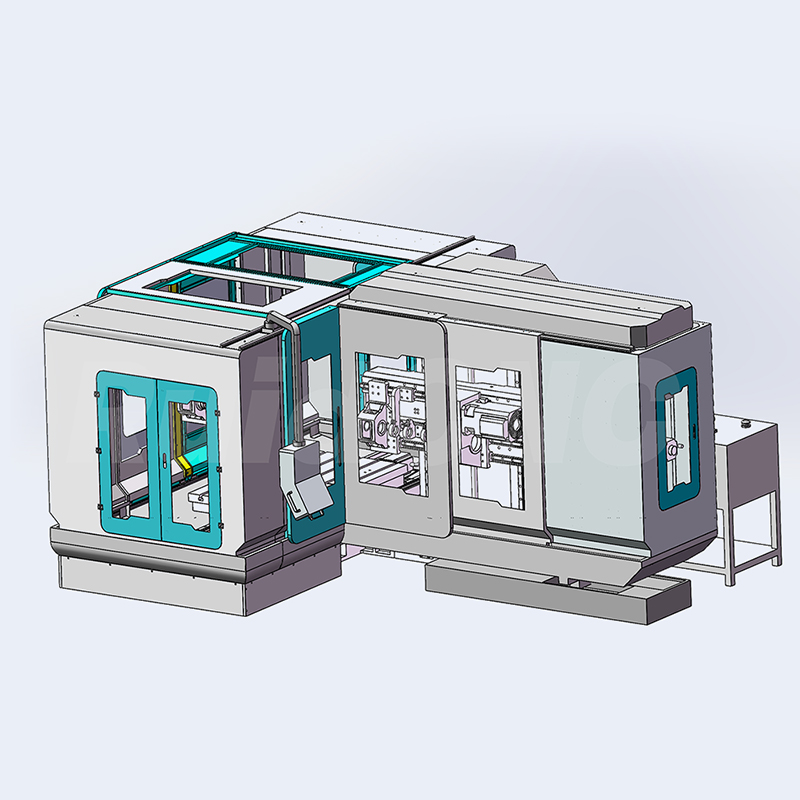
A typical deep hole drilling machine designed for EDM includes several critical components:
- Power Supply Unit: Generates controlled electrical pulses
- Electrode (Tool): Usually made of brass or copper
- Dielectric Fluid System: Flushes debris and cools the machining area
These components work together to enable consistent and accurate hole formation, even in difficult materials.
Advantages of EDM Deep Hole Drilling
One of the biggest advantages of EDM is its ability to machine extremely hard materials, including hardened steel, titanium, and superalloys. Since there is no mechanical contact, there is no cutting force, which eliminates tool deflection and reduces the risk of part deformation.
Additionally, EDM can produce very small diameter holes with high aspect ratios, making it ideal for applications such as aerospace cooling holes and precision molds.
Limitations of EDM Drilling
Despite its advantages, EDM is generally slower than mechanical drilling methods. The material removal rate is limited, which can increase production time in large-scale manufacturing.
Electrode wear is another factor that must be managed, as it can affect accuracy and increase operational costs. Furthermore, EDM systems tend to have higher initial and maintenance costs compared to conventional CNC machines.
What Is CNC Hole Drilling?
CNC hole drilling is a conventional machining process that uses computer-controlled systems to guide rotating cutting tools for material removal. It is widely used in manufacturing due to its speed, repeatability, and cost efficiency.
Definition and Process Overview
In cnc hole drilling, a drill bit rotates at high speed while being fed into the workpiece. The entire process is controlled by CNC (Computer Numerical Control) programming, ensuring consistent hole size, depth, and positioning.
Modern CNC systems can execute complex drilling cycles, including peck drilling, deep hole drilling, and multi-axis operations, making them highly versatile for industrial applications.
Types of CNC Drilling Machines
Several machine types are used depending on the application:
- Deep Hole Drilling Machine: Designed for holes with high depth-to-diameter ratios
- Gun Drilling Machine: Specialized for precision gun drilling with superior straightness
- Multi-Axis CNC Machines: Enable complex geometries and angled drilling
Among these, the gun drilling machine is particularly important for applications requiring deep, straight, and high-precision holes.
Advantages of CNC Hole Drilling
CNC drilling offers significant advantages in terms of productivity. It enables high-speed machining, making it ideal for mass production environments.
Other benefits include:
- Excellent repeatability and automation
- Lower cost per part in high-volume production
- Compatibility with a wide range of materials
Limitations of CNC Drilling
However, CNC drilling also has limitations. Mechanical cutting forces can lead to tool wear, especially when machining hard materials. Additionally, achieving extremely deep or micro-diameter holes can be challenging without specialized equipment like gun drilling machines.

Deep Hole Drilling Technologies Explained
What Is Deep Hole Drilling?
Deep hole drilling refers to drilling processes where the depth-to-diameter ratio exceeds 10:1. This type of machining requires specialized techniques to maintain straightness, accuracy, and effective chip removal.
Gun Drilling Technology
Gun drilling is one of the most widely used methods for deep hole machining. It uses a single-flute drill with internal coolant channels that deliver high-pressure fluid directly to the cutting edge.
This design ensures:
- Efficient chip evacuation
- Reduced heat generation
- Superior hole straightness
Gun Drilling Machine vs Traditional Drilling
Compared to conventional drilling:
- Coolant Delivery: Internal high-pressure system vs external cooling
- Accuracy: Much higher in gun drilling
- Surface Finish: Smoother internal hole surface
These advantages make gun drilling machines essential in industries requiring high precision, such as aerospace and medical manufacturing.
EDM Deep Hole Drilling vs CNC Hole Drilling: Key Differences
Comparison Table: EDM vs CNC Drilling
| Parameter | EDM Deep Hole Drilling | CNC Hole Drilling |
|---|---|---|
| Material Capability | Hardened steels, superalloys | Broad range of metals |
| Speed | Slow | High |
| Accuracy | Ultra-high (micron level) | High |
| Tool Interaction | No contact | Direct cutting |
| Hole Depth Ratio | Extremely high | Moderate to high |
| Cost per Part | Higher | Lower |
Precision and Tolerance Comparison
EDM excels in applications requiring ultra-tight tolerances and micro-hole drilling. It can achieve micron-level precision without mechanical distortion.
CNC drilling, especially when combined with gun drilling, can achieve excellent accuracy suitable for most industrial requirements, though it may not match EDM in extreme precision scenarios.
Efficiency and Production Speed
When it comes to productivity, CNC drilling is significantly faster. It is the preferred choice for large-scale manufacturing where cycle time is critical.
EDM, on the other hand, is better suited for low-volume, high-precision tasks where speed is less important than accuracy.
Material Compatibility
EDM is ideal for electrically conductive materials, regardless of hardness. This includes hardened tool steels and exotic alloys.
CNC drilling works best with materials that can be machined mechanically, such as aluminum, mild steel, and certain alloys.
Conclusion
Both edm deep hole drilling and cnc hole drilling play essential roles in modern manufacturing. The choice between them depends on your specific application requirements.
If your priority is extreme precision, micro-hole capability, and machining hard materials, EDM is the optimal solution. However, if you need speed, efficiency, and cost-effective production, CNC drilling—especially with gun drilling machines—is the better choice.
Ultimately, understanding the strengths and limitations of each method allows manufacturers to optimize performance, reduce costs, and achieve superior product quality.