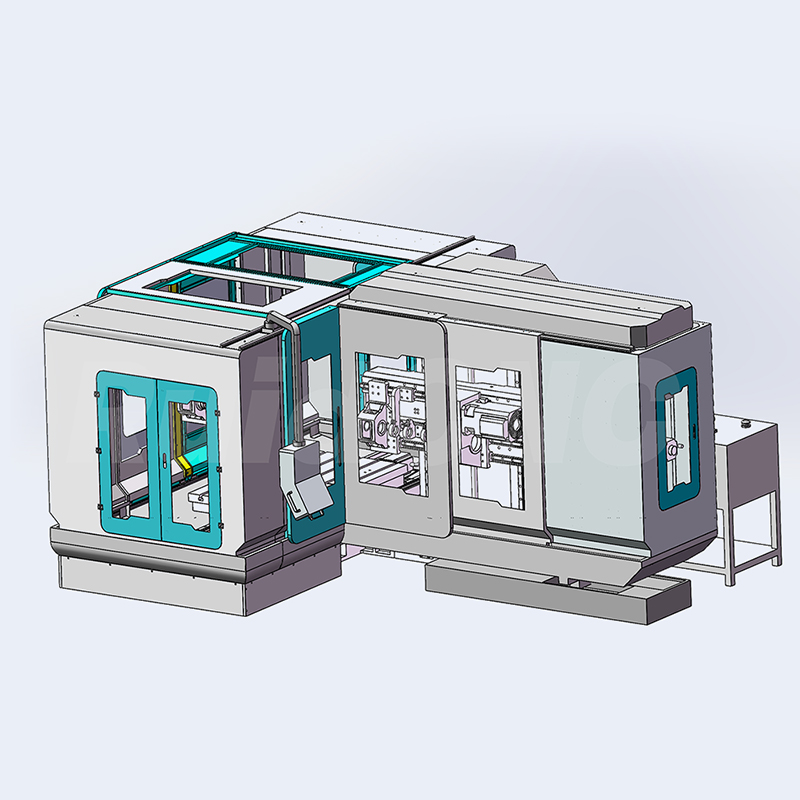
Introduction: Understanding Hole-Making Processes
In the world of precision machining, creating accurate and reliable holes is essential for the functionality of countless mechanical components. From automotive engine blocks to aerospace hydraulic systems, the quality of a hole often determines the performance, safety, and longevity of a product. However, not all holes are created equally. Depending on the application, engineers and machinists choose between drilling, boring, and reaming to achieve the desired size, shape, and surface finish.
Drilling is typically the first step in hole-making, used to create a new hole in a material. Boring, on the other hand, enlarges an existing hole with higher precision, while reaming fine-tunes the hole diameter and improves surface finish to meet exact tolerances. In modern manufacturing, these processes are often performed using advanced equipment like gun drilling machines, CNC gun drilling machines, and deep hole drilling machines. Each tool and technique brings unique advantages depending on the material, hole depth, and required precision.
The advent of gun drilling has revolutionized deep hole drilling. Unlike conventional drills, gun drills can create long, straight holes with high aspect ratios and excellent surface finishes. This makes them indispensable in industries that demand high-precision, deep holes such as mold making, medical devices, and aerospace components. By understanding the differences between drilling, boring, and reaming—and knowing when to use specialized machines like deep hole drilling machines or CNC gun drilling machines—manufacturers can optimize both efficiency and quality in their operations.
In this article, we will explore each of these processes in detail, compare their advantages, and provide guidance on selecting the right method for your project. Whether you are an experienced machinist or a manufacturing professional looking to enhance precision, understanding these hole-making techniques is fundamental to achieving high-quality results.
What is Drilling? The Basics
Drilling is one of the most fundamental machining processes, used to create holes in a wide variety of materials including metals, plastics, and composites. At its core, drilling involves a rotating cutting tool—commonly known as a drill bit—that removes material to form a cylindrical hole. The process is versatile and widely applied in industries ranging from automotive manufacturing to aerospace engineering.
Types of Drills
Drills come in many forms, each designed for specific tasks:
-
Twist Drills: The most common type, ideal for general-purpose drilling in a wide range of materials.
-
Gun Drills: Specialized for deep hole drilling, gun drills allow for straight, long holes with high aspect ratios and excellent surface finishes. Unlike conventional drills, they often include a coolant system that passes through the drill to remove chips and maintain stability.
-
Specialized Drills: These include spade drills, indexable drills, and step drills, each optimized for particular materials or hole sizes.
Gun Drilling: Precision in Deep Holes
One of the most critical advancements in drilling technology is gun drilling, often performed on gun drilling machines or CNC gun drilling machines. This process is especially suitable for deep holes that would be difficult to achieve with conventional drilling methods. For example:
-
Aspect Ratio: Gun drills can produce holes with a depth-to-diameter ratio of 300:1 or more.
-
Precision: The combination of steady rotation, linear feed, and coolant flow ensures minimal deviation and a smooth surface finish.
-
Applications: Gun drilling is widely used in mold-making, medical device manufacturing, hydraulic cylinders, and aerospace components.
Drilling Machines
Drilling can be performed on various machines depending on the precision and depth required:
-
Conventional Drill Presses: Suitable for simple, shallow holes.
-
Deep Hole Drilling Machines: Designed specifically for creating long, precise holes in metals and alloys.
-
CNC Gun Drilling Machines: Combine computer control with gun drilling technology, enabling highly accurate and repeatable hole-making in complex parts.
When to Use Drilling
Drilling is generally the first step in hole-making. For shallow or moderate-depth holes, a standard drill or twist drill is often sufficient. However, for high-precision deep holes, gun drilling on a CNC gun drilling machine or deep hole drilling machine is preferred to ensure accuracy, maintain straightness, and achieve smooth surface finishes.
What is Boring? Enlarging Holes with Precision
Boring is a machining process used to enlarge and refine an existing hole, improving both its diameter accuracy and surface finish. Unlike drilling, which creates the initial hole, boring is typically a secondary operation designed to achieve precise tolerances, correct alignment, and concentricity in critical components.
How Boring Works
Boring removes material from the interior of an existing hole using a single-point cutting tool or a boring head. The tool is fed along the axis of the hole while the workpiece or tool rotates, allowing precise control over the final diameter and straightness.
Boring can be performed on:
-
Conventional Boring Machines: Manual or semi-automatic machines used for medium-precision holes.
-
Deep Hole Drilling Machines with Boring Heads: Machines designed to handle high-precision, long holes often found in hydraulic cylinders, molds, and aerospace components.
-
CNC Boring Centers: Computer-controlled boring machines capable of extremely tight tolerances and complex patterns, often integrated into CNC gun drilling machines for combined drilling and boring operations.
Boring vs. Drilling
The main difference between boring and drilling lies in their purpose and precision:
| Feature | Drilling | Boring |
|---|---|---|
| Purpose | Create new hole | Enlarge existing hole |
| Precision | Medium | High |
| Material Removal | Moderate | Controlled and precise |
| Surface Finish | Rough | Smooth to fine |
While drilling removes material quickly to create a hole, boring focuses on refining the hole dimensions and achieving high accuracy. In applications where hole diameter and straightness are critical, boring is often the preferred choice after initial drilling.
Applications of Boring
Boring is commonly used in industries where precision and reliability are critical:
-
Automotive: Engine cylinder bores, transmission components.
-
Aerospace: Hydraulic systems, landing gear components.
-
Industrial Manufacturing: Large molds, shafts, and machine housings.
Why Use Deep Hole Drilling Machines for Boring
Advanced deep hole drilling machines equipped with boring capabilities allow machinists to combine drilling and boring in a single setup. This reduces setup errors, improves alignment, and ensures the finished hole meets strict dimensional requirements.
What is Reaming? Achieving Exact Diameters
Reaming is a precision machining process used to fine-tune an existing hole, improving both its diameter accuracy and surface finish. Unlike drilling, which creates a hole, or boring, which enlarges it, reaming is the final step in the hole-making process, ensuring the hole meets strict tolerances and achieves a smooth, finished surface.
How Reaming Works
Reaming involves a multi-edged cutting tool called a reamer. The reamer is rotated and fed along the axis of the pre-drilled or bored hole. This removes a small amount of material—usually just a few thousandths of an inch—resulting in a perfectly round, dimensionally accurate hole with excellent surface finish.
Reaming can be performed using:
-
Hand Reamers: Ideal for small jobs or manual operations.
-
Machine Reamers: Used in lathes, milling machines, or drill presses for medium to high-precision holes.
-
CNC Reaming Attachments: Integrated with CNC gun drilling machines or deep hole drilling machines for automated, high-precision finishing in complex parts.
Reaming vs Boring
While both processes refine existing holes, there are key differences:
| Feature | Boring | Reaming |
|---|---|---|
| Material Removal | Medium | Very Low |
| Precision | High | Very High |
| Surface Finish | Medium | Excellent |
| Typical Use | Hole enlargement | Final sizing and finishing |
Boring removes more material and corrects the hole geometry, whereas reaming provides the exact diameter and polished finish required for high-precision assemblies.
Applications of Reaming
Industries that rely on reaming for precision include:
-
Aerospace: Hydraulic systems, jet engine components.
-
Medical Devices: Surgical instruments and implants requiring micrometer tolerances.
-
Precision Engineering: Bearings, gears, and aerospace fasteners.
Why Reaming is Important After Drilling or Boring
Even when using gun drilling machines or deep hole drilling machines, the initial hole may not achieve the desired tolerance or surface finish. Reaming ensures:
-
Accurate final diameter.
-
Smooth surfaces for reduced friction and wear.
-
Proper fit for mating components, such as pins, bushings, or fasteners.

Key Differences Between Drilling, Boring, and Reaming
Understanding the distinctions between drilling, boring, and reaming is crucial for selecting the right process in manufacturing. While all three are hole-making methods, they differ in purpose, precision, material removal, and surface finish. Making the right choice ensures efficiency, cost-effectiveness, and high-quality results.
Purpose and Process Differences
-
Drilling
-
Primary process to create new holes in a workpiece.
-
Suitable for shallow or moderate-depth holes.
-
Can be performed using conventional drills, gun drilling machines, or CNC gun drilling machines for precision deep holes.
-
-
Boring
-
Enlarges and refines existing holes to achieve higher accuracy.
-
Corrects alignment and straightness issues from initial drilling.
-
Often performed on deep hole drilling machines or CNC boring centers.
-
-
Reaming
-
Finishing process for final hole sizing and surface smoothness.
-
Removes very small amounts of material to meet strict tolerances.
-
Used after drilling or boring, especially when deep hole drilling is involved to achieve precision fits.
-
Comparative Table: Drilling vs Boring vs Reaming
| Process | Purpose | Precision | Material Removal | Surface Finish | Typical Tool/Equipment |
|---|---|---|---|---|---|
| Drilling | Create new hole | Medium | High | Rough | Twist drill, gun drill, CNC gun drilling machine |
| Boring | Enlarge and refine hole | High | Medium | Medium | Boring bar, CNC boring head, deep hole drilling machine |
| Reaming | Final sizing and finish | Very High | Low | Fine | Reamer, CNC reaming attachment |
Practical Guidance for Choosing the Right Process
-
Drilling: Start here for new holes. Use gun drilling for deep, high-aspect-ratio holes.
-
Boring: Choose when hole diameter accuracy and straightness are critical, especially in automotive or aerospace components.
-
Reaming: Apply as a finishing step for precise fits, such as bearings, pins, and fasteners.
By clearly distinguishing the processes and understanding their respective advantages, manufacturers can reduce errors, minimize rework, and achieve optimal results in both simple and complex components.
Conclusion
Drilling, boring, and reaming are fundamental processes in precision machining, each serving a distinct purpose in creating high-quality holes. Drilling is the starting point, ideal for creating new holes quickly, including deep hole drilling using gun drilling machines or CNC gun drilling machines. Boring refines the hole by enlarging it with high accuracy, correcting alignment and straightness issues. Reaming completes the process, providing exact diameters and smooth surfaces for critical components.
Understanding the differences between these processes allows manufacturers to select the right method based on hole depth, material type, and tolerance requirements. Combining these techniques—drill, bore, then ream—can optimize both precision and efficiency. Advanced solutions like gun drilling and CNC gun drilling machines ensure consistent, reliable results, especially for complex or high-precision applications in aerospace, automotive, mold making, and medical device manufacturing.
By applying the appropriate hole-making technique, engineers and machinists can achieve not only dimensional accuracy but also improved component performance, reduced wear, and longer service life, reinforcing the importance of selecting the right process for every machining challenge.