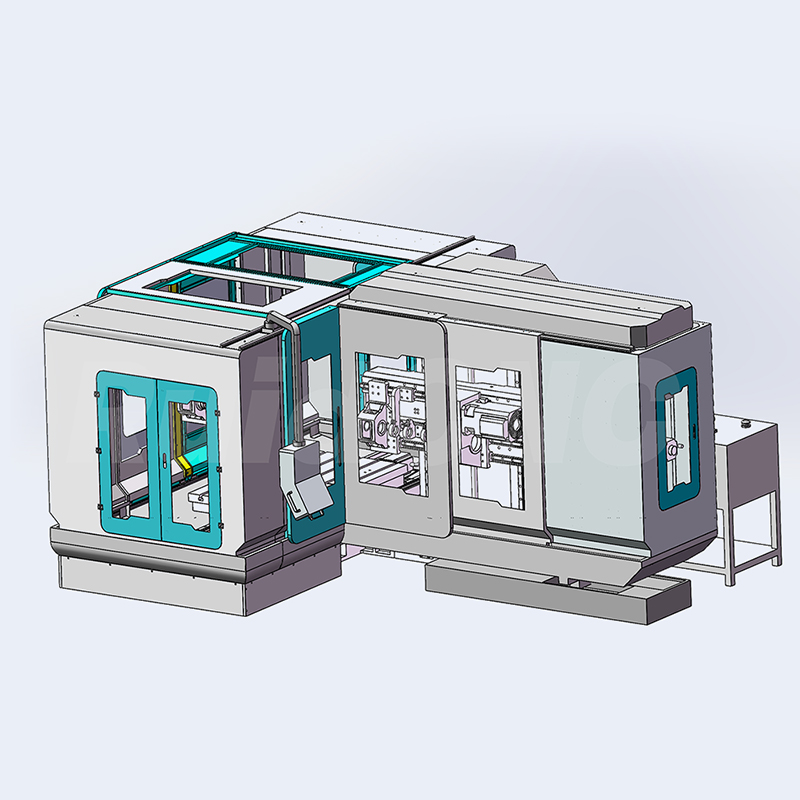
Introduction: Why Understanding Different Types of Drilling Machine Matters
In modern manufacturing, drilling machines are essential equipment used to create precise holes in metals, plastics, composites, and other industrial materials. Although the basic concept of drilling seems simple, the reality is that the different types of drilling machine available today vary significantly in structure, automation level, and application capability.
Understanding the classification of drilling machine is crucial because selecting the wrong equipment can lead to poor accuracy, low productivity, and increased production costs. On the other hand, choosing the right machine—such as a cnc gun drilling machine or a deep drilling machine—can significantly improve machining efficiency, surface quality, and consistency.
From basic workshop tools to advanced CNC-controlled systems, drilling machines are widely used across industries such as aerospace, automotive, mold manufacturing, energy, and medical engineering.
What is a Drilling Machine? Definition, Function, and Core Components
A drilling machine is a mechanical tool designed to produce cylindrical holes in solid materials using a rotating cutting tool known as a drill bit. The cutting action is achieved by rotating the tool and feeding it into the workpiece.
Core Functions
- Drilling through holes and blind holes
- Enlarging existing holes (boring or reaming)
- Creating threaded holes (tapping)
- Producing deep and high-precision holes
Main Components
- Spindle (rotation system)
- Drill bit (cutting tool)
- Feed mechanism (controls movement depth)
- Worktable (supports workpiece)
- Coolant system (reduces heat and removes chips)
In advanced systems like a horizontal deep hole drilling machine or Vertical Deep Hole Drilling Machine, these components are engineered for higher rigidity and precision.
Classification of Drilling Machine
The classification of drilling machine can be understood from three main perspectives: structure, operation, and application.
1. Classification Based on Structure
Portable Drilling Machines
Lightweight handheld machines used for on-site drilling and repair work. They are flexible but not suitable for high-precision or deep hole applications.
Bench Drilling Machines
Compact machines mounted on workbenches, ideal for small parts and light-duty operations requiring moderate precision.
Pillar (Upright) Drilling Machines
Vertical machines with a strong column structure, offering better rigidity and stability for medium-sized components.
Radial Drilling Machines
Feature a movable arm that allows the drill head to reach different positions without moving the workpiece, suitable for large and heavy components.
2. Classification Based on Operation
Manual Drilling Machines
Fully operated by humans, suitable for simple and low-volume tasks.
Semi-Automatic Drilling Machines
Combine manual setup with automated feed control for improved consistency.
Automatic Drilling Machines
Perform drilling cycles automatically, increasing production efficiency.
CNC Drilling Machines
Computer-controlled systems offering high precision, repeatability, and complex machining capability. This category includes advanced systems such as the cnc gun drilling machine.
3. Classification Based on Application
General-Purpose Drilling Machines
Used for standard drilling tasks across various industries.
Deep Drilling Machine
Designed for high aspect ratio holes where the depth is much greater than the diameter (typically L/D > 10). These machines require advanced coolant and chip removal systems.
Special-Purpose Drilling Machines
Customized machines designed for specific industrial applications such as multi-spindle drilling or PCB drilling.
Common Kinds of Drilling Machine Used in Industry
Bench Drilling Machine
Used for small-scale drilling with high manual control but limited depth capability.
Pillar Drilling Machine
Provides better stability and is widely used in general workshops.
Radial Drilling Machine
Ideal for large workpieces where flexibility and reach are required.
Gang Drilling Machine
Multiple spindles arranged in sequence to perform different drilling operations efficiently.
Multi-Spindle Drilling Machine
Designed for mass production, allowing multiple holes to be drilled simultaneously.
Deep Drilling Machine
Specialized equipment designed for precision deep hole machining, commonly used in aerospace, automotive, and mold industries.
Deep Drilling Machine: Technology, Types, and Applications
A deep drilling machine is used for producing holes with very high length-to-diameter ratios, often exceeding 10:1 or even 100:1 in advanced applications.
Types of Deep Drilling Machines
Gun Drilling Machines
Use a single-flute drill with internal coolant delivery for high precision and excellent surface finish.
BTA Drilling Machines
Suitable for large diameter deep holes with external chip removal systems.
Ejector Drilling Machines
Use a dual-tube system for coolant and chip evacuation, suitable for medium applications.
Advantages
- Extremely high accuracy
- Excellent surface finish
- Efficient chip evacuation
- Stable deep hole performance
Applications
- Aerospace components
- Hydraulic cylinders
- Injection molds
- Oil and gas drilling equipment

CNC Gun Drilling Machine: High Precision Deep Hole Solution
A cnc gun drilling machine combines CNC automation with gun drilling technology for superior precision and repeatability.
Key Features
- CNC-controlled feed and spindle movement
- High-pressure coolant system
- Ultra-high precision (up to ±0.005 mm in advanced systems)
- Excellent straightness over deep holes
Applications
- Aerospace components
- Automotive fuel systems
- Mold cooling channels
- Medical instruments
Compared with conventional machines, CNC gun drilling offers higher accuracy, better repeatability, and significantly improved efficiency in deep hole applications.
Horizontal Deep Hole Drilling Machine vs Vertical Deep Hole Drilling Machine
Horizontal Deep Hole Drilling Machine
Designed for long cylindrical components such as shafts and tubes.
Advantages:
- Excellent stability for long workpieces
- High straightness accuracy
- Efficient for shaft machining
Vertical Deep Hole Drilling Machine
Used for heavy or bulky components where vertical alignment is more practical.
Advantages:
- Gravity-assisted chip removal
- Compact floor space
- Easier handling of heavy parts
Comparison Table
| Feature | Horizontal Machine | Vertical Machine |
|---|---|---|
| Best For | Long shafts | Heavy blocks |
| Chip Removal | Horizontal coolant flow | Gravity-assisted |
| Space Requirement | Larger | Smaller |
| Stability | High for long parts | High for heavy parts |
CNC Drilling Machines vs Conventional Drilling Machines
CNC drilling machines represent a major technological advancement over conventional systems.
Key Differences
- CNC machines are automated, while conventional machines are manual
- CNC offers much higher precision and repeatability
- Conventional machines are more dependent on operator skill
- CNC systems support complex geometries and deep hole drilling
Performance Comparison
| Feature | Conventional | CNC |
|---|---|---|
| Accuracy | Low–Medium | Very High |
| Automation | None | Full CNC control |
| Productivity | Low | High |
| Deep Hole Capability | Limited | Excellent |
Conclusion
The different types of drilling machine available today form a complete ecosystem ranging from simple manual tools to highly advanced CNC systems. Understanding the classification of drilling machine helps manufacturers select the right equipment based on precision, depth, material, and production requirements.
Whether it is a basic pillar drill or a highly specialized cnc gun drilling machine, each machine plays a specific role in modern industry. Advanced systems like the deep drilling machine, horizontal deep hole drilling machine, and Vertical Deep Hole Drilling Machine are essential for high-precision industries where accuracy and reliability are critical.
Ultimately, choosing the right drilling machine is not just about capability—it is about matching the right technology to the right application for maximum efficiency and long-term value.