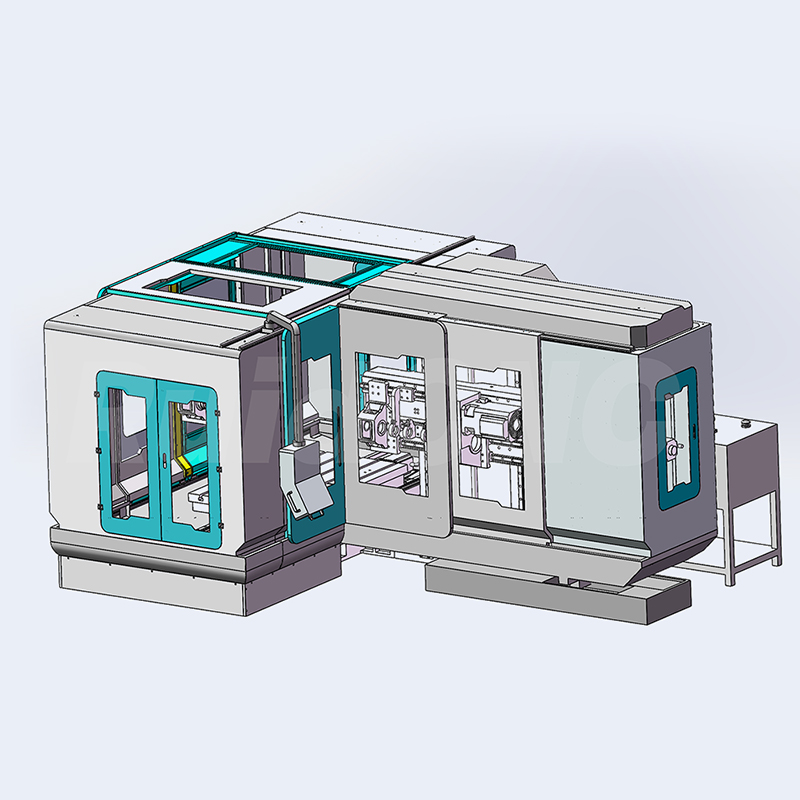
Introduction to Gun Drill Machining
Gun drill machining is a highly specialized manufacturing process tailored to produce deep, straight, and precise holes with exceptional dimensional accuracy. Unlike conventional drilling methods, which often struggle to maintain alignment and consistency over extended depths, gun drill machining is specifically engineered to handle high length-to-diameter (L/D) ratio holes—frequently exceeding 100:1, and even reaching up to 300:1 in advanced applications.
Originally developed for the production of gun barrels, this technology has evolved into a cornerstone of modern precision engineering. Today, industries such as aerospace, automotive, medical manufacturing, and mold making rely heavily on deep hole drilling machines and CNC gun drilling machines to achieve consistent, high-quality internal geometries that standard drills simply cannot deliver. The core of this process lies in the gun drilling process, which combines a single-lip cutting tool with high-pressure coolant delivery to address the unique challenges of deep hole machining.
What Is a Gun Drilling Process?
The gun drilling process is a precision machining method specifically designed to produce deep, straight holes with high dimensional accuracy and superior surface finish. Unlike twist drilling, which removes material using multiple cutting edges, this process relies on a single-lip deep hole gun drill paired with a high-pressure internal coolant system—two key components that distinguish it from conventional drilling.
At its core, the gun drilling process is engineered to solve three critical challenges in deep hole machining: maintaining straightness over long distances, ensuring efficient chip evacuation, and controlling heat generation—all of which are essential for producing high-quality deep holes.
Core Working Principle of Gun Drill Machining
A deep hole gun drill consists of three main functional elements that work in tandem to deliver precision:
-
Single cutting edge (cutting lip): Removes material with high precision, minimizing tool deflection and ensuring consistent hole diameter.
-
Guide pads: Stabilize the tool during operation, reduce vibration, and burnish the hole surface to improve finish.
-
Internal coolant channel: Delivers high-pressure coolant directly to the cutting zone, flushing chips away and reducing heat buildup.
During operation, the sequence is highly synchronized: Coolant is pumped through the deep hole gun drill at high pressure, chips are flushed back along a V-shaped groove on the tool, and the guide pads maintain alignment and enhance surface finish. This mechanism allows gun drill machining to achieve exceptional straightness and repeatability, even at extreme depths.
Step-by-Step Breakdown of the Gun Drilling Process
-
Pilot Hole Preparation: A short, accurately aligned pilot hole is created to guide the deep hole gun drill and ensure initial straightness, preventing tool wandering at the start of the process.
-
Tool Alignment and Setup: The workpiece and deep hole gun drill are precisely aligned using guide bushings in the deep hole drilling machine, a critical step for maintaining L/D ratio accuracy.
-
Coolant Activation: High-pressure coolant (often oil-based, for better lubrication and chip evacuation) is introduced before cutting begins to pre-cool the tool and workpiece.
-
Deep Drilling Operation: The CNC gun drilling machine feeds the deep hole gun drill slowly into the material while maintaining constant speed and pressure, optimizing cutting efficiency and tool life.
-
Chip Evacuation: Chips are continuously removed through the tool’s flute, preventing clogging, overheating, and tool breakage—common issues in conventional deep drilling.
-
Finishing and Retraction: Once the required depth is reached, the tool is carefully withdrawn while coolant flow continues, ensuring the hole surface remains free of burrs and damage.
Key Process Parameters for Optimal Performance
To achieve consistent, high-quality results in gun drill machining, several parameters must be precisely controlled. The following table outlines typical ranges and their impact, based on industry best practices and real-world machining experience:
|
Parameter
|
Typical Range
|
Impact on Machining
|
|---|---|---|
|
Cutting Speed
|
50 – 200 m/min
|
Directly affects tool life (higher speeds may shorten life) and heat generation (excessive speed causes overheating).
|
|
Feed Rate
|
0.01 – 0.2 mm/rev
|
Controls chip load (too high = tool breakage; too low = inefficient cutting) and surface finish (lower feed = smoother finish).
|
|
Coolant Pressure
|
50 – 150 bar
|
Ensures effective chip evacuation; insufficient pressure leads to clogging and tool damage.
|
|
Tool Diameter
|
1 – 50 mm
|
Determines hole size capability; smaller diameters require more precise alignment to avoid deflection.
|
|
L/D Ratio
|
Up to 300:1
|
Defines achievable hole depth; higher ratios require more rigid machine setup and advanced coolant systems.
|
Key Components of a CNC Gun Drilling Machine
A CNC gun drilling machine is a highly engineered system designed to handle the unique challenges of gun drill machining. Its components work in harmony to ensure precision, efficiency, and repeatability in deep hole drilling operations. Understanding these components is critical for operators and engineers to optimize performance, reduce errors, and extend tool life.
1. Spindle
The spindle is the heart of the CNC gun drilling machine. It provides rotation to the deep hole gun drill and must maintain high rigidity to prevent vibration or deflection—both of which compromise hole straightness and surface finish. Key features of a high-performance spindle include:
-
High-speed rotation capability (up to 5000 RPM or more), adjustable based on material and tool diameter.
-
Precision bearings to minimize runout (typically ≤ 0.002 mm), ensuring consistent tool rotation.
-
Integration with CNC control for variable speeds, allowing operators to optimize cutting parameters for different materials.
2. Guide Bush
The guide bush stabilizes the deep hole gun drill at the entrance of the hole and ensures the tool stays aligned throughout the drilling process. Its design is critical for maintaining L/D ratio accuracy, especially in deep holes. Key features include:
-
Tungsten carbide or hardened steel construction for wear resistance, as it comes into direct contact with the rotating tool.
-
Precision alignment with the workpiece, ensuring the tool enters the pilot hole without deviation.
-
Adjustable positioning for different hole diameters, making the CNC gun drilling machine versatile across applications.
3. Coolant System
Gun drill machining relies heavily on a high-pressure internal coolant system—one of the most critical components for successful deep hole drilling. Its components and functionality include:
-
A high-pressure pump delivering coolant at 50–150 bar, ensuring it reaches the cutting zone even at extreme depths.
-
Flow channels inside the deep hole gun drill tube to carry coolant directly to the cutting edge, where heat and chips are concentrated.
-
A filtration system to remove chips and debris, preventing clogging of the coolant channels and tool damage.
The benefits of a well-designed coolant system are clear: efficient chip evacuation, reduced heat buildup (extending tool life), improved surface finish, and prevention of workpiece damage.
4. Drill Tube / Tool Holder
The deep hole gun drill itself is a specialized tool, consisting of three key parts: a single-lip cutting edge, a chip flute for internal chip evacuation, and a tool holder that connects the drill to the spindle and coolant supply. Drill tubes come in various diameters and lengths, allowing the CNC gun drilling machine to achieve deep hole drilling with L/D ratios exceeding 300:1. The tool holder is designed to maintain rigidity and ensure coolant flows seamlessly into the drill’s internal channel.
5. Workpiece Table and Clamping System
A rigid workpiece setup is critical for precision in gun drill machining. The CNC gun drilling machine’s table and clamping system are engineered to minimize vibration and deflection:
-
A CNC-controlled table allows precise positioning of the workpiece, ensuring the hole is drilled at the correct location.
-
Hydraulic or mechanical clamps secure the part without deformation, preventing movement during drilling.
-
A vibration-dampening design reduces machine chatter, which can cause tool breakage and poor hole quality.
6. CNC Control System
The CNC control system automates the gun drilling process, ensuring repeatability and efficiency. Modern systems offer advanced features, including:
-
Programmable spindle speed, feed rate, and drilling depth, allowing for consistent performance across multiple parts.
-
Real-time monitoring of tool load, coolant pressure, and vibration, with alerts for potential issues (e.g., clogging, tool wear).
-
Integration with Industry 4.0 technologies, enabling remote monitoring, data collection, and process optimization.

Advantages of Gun Drill Machining
Gun drill machining has become the gold standard for precision deep hole manufacturing because it offers several key advantages over conventional drilling methods. These benefits are particularly critical in industries where accuracy, surface quality, and repeatability cannot be compromised—such as aerospace, automotive, and medical manufacturing.
1. Exceptional Precision and Tight Tolerances
Gun drills maintain remarkable straightness and dimensional accuracy, even for extremely deep holes. Based on industry data and real-world applications, typical tolerances include:
-
Straightness deviation: ≤ 0.01 mm per 100 mm
-
Diameter tolerance: ±0.02 mm
This precision makes gun drill machining ideal for applications like aerospace fuel systems, automotive injectors, and medical instruments, where even minor deviations can lead to system failure or compromised performance.
2. Superior Surface Finish
Thanks to the guide pads and internal coolant system, gun drilling produces a smooth, consistent surface without the need for additional finishing in many cases. Industry benchmarks for surface finish include:
-
Surface finish range: Ra 0.4–1.6 µm
-
Reduced tool marks compared to twist drilling or reaming
-
Minimized micro-cracks and burrs
A smooth surface is particularly important for hydraulic components and mold cooling channels, as it reduces wear and ensures proper fluid flow.
3. Capability for Extremely Deep Holes
Gun drilling excels at high L/D ratio drilling—its primary advantage over conventional methods. Key capabilities include:
-
Holes can reach up to 300× the tool diameter
-
Standard twist drills struggle beyond 5–10× diameter
-
CNC gun drilling machines maintain straightness and prevent tool deflection, even at maximum depths
This ability is essential for applications like deep fuel injector channels, turbine shafts, and mold cores.
4. High Efficiency and Repeatability
CNC-controlled gun drilling offers automated, repeatable production, saving time and labor costs. The following table summarizes key efficiency benefits:
|
Advantage
|
Benefit
|
|---|---|
|
Automated feed control
|
Consistent hole quality across multiple parts, reducing rework and scrap.
|
|
High-pressure coolant
|
Faster material removal and reduced tool wear, lowering tooling costs.
|
|
Minimal secondary finishing
|
Saves time and reduces labor costs, improving overall production efficiency.
|
5. Versatility Across Materials
Gun drilling is highly versatile and works on a wide range of materials, making it suitable for diverse industries. Key materials include steels and stainless steels, titanium and aluminum alloys, and even plastics and composites. The ability to drill diverse materials without compromising quality is a major reason why gun drilling is widely adopted across precision manufacturing sectors.
Materials Suitable for Gun Drill Machining
The choice of material has a significant impact on the gun drilling process, affecting tool selection, cutting parameters, and machining performance. One of the key advantages of deep hole gun drill technology is its versatility across a wide range of materials, each with unique challenges and solutions.
1. Metals
Gun drilling is most commonly used for metal machining, with different metals requiring tailored approaches. The following breakdown is based on industry expertise and practical machining experience:
-
Carbon Steel and Alloy Steel: Most commonly drilled using high-speed steel or carbide-tipped deep hole gun drills. Excellent straightness and surface finish are achievable with standard parameters.
-
Stainless Steel: More challenging due to work-hardening properties. Requires optimized feed rate, high-pressure coolant, and sometimes coated drills (e.g., TiN or TiAlN) to reduce tool wear.
-
Aluminum and Aluminum Alloys: Soft and ductile, prone to chip welding. Lower coolant pressure may be used, but careful chip evacuation is critical to prevent clogging.
-
Titanium and Nickel Alloys: Difficult-to-machine materials with low thermal conductivity. Require slow feed, strong coolant flow, and a robust CNC gun drilling machine setup to manage heat buildup.
2. Plastics and Composites
Gun drilling is also effective for engineering plastics and composite materials, with adjustments to cutting parameters to avoid damage:
-
PTFE, PEEK, and other polymers: Minimal heat generation, so slower feed rates may be used to prevent melting. A smooth bore is achievable without cracking or deformation.
-
Fiber-reinforced composites: Chips tend to be long and stringy, requiring effective coolant and chip evacuation. CNC control ensures straightness and prevents delamination of the composite layers.
3. Material-Specific Challenges and Solutions
To optimize gun drill machining for different materials, it is critical to address material-specific challenges. The following table provides practical solutions based on industry best practices:
|
Material Type
|
Challenge
|
Recommended Solution
|
|---|---|---|
|
Stainless Steel
|
Work hardening, tool wear
|
Coated carbide drills, lower feed rate, high-pressure coolant (80–120 bar)
|
|
Titanium Alloy
|
Heat buildup, poor thermal conductivity
|
Slow feed rate, high-pressure coolant (100–150 bar), vibration damping
|
|
Aluminum
|
Chip welding, burr formation
|
Optimize feed rate, use anti-adhesion coatings on drills, lower coolant pressure (50–80 bar)
|
|
Plastics/Composites
|
Melting or delamination
|
Controlled feed and speed, minimal heat generation, proper chip evacuation
|
4. Recommended Cutting Parameters by Material
Cutting parameters should always be adapted to the material for optimal gun drilling performance. The following table provides industry-standard ranges, validated through extensive testing and real-world applications:
|
Material
|
Cutting Speed (m/min)
|
Feed Rate (mm/rev)
|
Coolant Pressure (bar)
|
|---|---|---|---|
|
Carbon Steel
|
80–150
|
0.03–0.12
|
60–100
|
|
Stainless Steel
|
50–100
|
0.02–0.08
|
80–120
|
|
Aluminum
|
120–200
|
0.05–0.15
|
50–80
|
|
Titanium
|
40–80
|
0.01–0.05
|
100–150
|
|
PTFE / PEEK
|
80–150
|
0.05–0.1
|
40–70
|
Tip: Always test on a sample part before full production, as material quality, hardness, and geometry may affect performance. This practice ensures optimal results and reduces scrap.
Comparison: Gun Drill Machining vs Conventional Drilling
Understanding the differences between gun drilling and conventional drilling is crucial for selecting the right method for your manufacturing needs. While conventional drills are common for shallow holes and general-purpose applications, gun drill machining excels in precision, depth, and surface quality—making it the preferred choice for high-precision deep hole applications.
1. Tool and Machine Design
|
Feature
|
Gun Drilling
|
Conventional Drilling
|
|---|---|---|
|
Drill Design
|
Single-lip deep hole gun drill with guide pads & internal coolant channel
|
Twist drill with multiple cutting edges, no internal coolant channel
|
|
Machine Type
|
CNC gun drilling machine or specialized deep hole drilling machine
|
Standard drill press or CNC mill
|
|
Support and Alignment
|
Guide bush stabilizes tool, ensuring alignment over deep depths
|
Minimal support, relies on machine rigidity (prone to deflection)
|
Explanation: The deep hole gun drill’s single-lip design and guide pads provide superior stability, preventing tool wandering and ensuring straight holes. Conventional twist drills tend to flex in long holes, causing taper and deviation from the desired path.
2. Hole Depth and L/D Ratio
|
Parameter
|
Gun Drilling
|
Conventional Drilling
|
|---|---|---|
|
Typical Hole Depth
|
Up to 300× diameter
|
Up to 10× diameter
|
|
Suitable L/D Ratio
|
High (100–300:1)
|
Low (≤10:1)
|
Explanation: Gun drill machining is purpose-built for deep holes, with specialized components to maintain alignment and chip evacuation. Conventional drills quickly lose accuracy beyond shallow depths, making them unsuitable for high L/D ratio applications.
3. Surface Finish and Tolerances
|
Parameter
|
Gun Drilling
|
Conventional Drilling
|
|---|---|---|
|
Surface Finish Ra
|
0.4–1.6 µm
|
3–6 µm or higher
|
|
Diameter Tolerance
|
±0.02 mm
|
±0.1 mm or more
|
|
Straightness
|
≤ 0.01 mm per 100 mm
|
Poor for deep holes (deviation increases with depth)
|
Explanation: Gun drilling produces smoother holes with tight tolerances, often eliminating the need for secondary finishing operations (e.g., reaming or honing). Conventional drilling requires additional finishing to achieve comparable surface quality and tolerances.
4. Material and Production Capability
-
Gun Drilling: Handles hard metals (titanium, stainless steel), soft metals (aluminum), and non-metals (plastics, composites); suitable for high-volume precision parts where consistency is critical.
-
Conventional Drilling: Best for softer materials (e.g., low-carbon steel, wood) and shallow holes; less efficient for high-volume precision manufacturing, as it requires more rework and secondary finishing.
5. Cost Considerations
|
Aspect
|
Gun Drilling
|
Conventional Drilling
|
|---|---|---|
|
Initial Investment
|
Higher (specialized CNC gun drilling machine, custom deep hole gun drills)
|
Lower (standard drill press, off-the-shelf twist drills)
|
|
Production Efficiency
|
Higher for deep holes (faster cycle times, less rework)
|
Lower for deep or precision holes (more rework, secondary finishing)
|
|
Tool Life
|
Longer with proper coolant (reduced heat and wear)
|
Shorter for deep or hard materials (excessive heat and deflection)
|
Explanation: While gun drill machining has a higher upfront cost, it becomes cost-effective for high-precision, high-volume production due to reduced rework, lower tooling costs over time, and elimination of secondary finishing steps.
Summary
Gun drill machining is a specialized precision manufacturing process designed to produce deep, straight, and high-quality holes with exceptional accuracy—making it indispensable in industries where conventional drilling methods fall short. At the core of this technology is the gun drilling process, which uses a single-lip deep hole gun drill paired with a high-pressure coolant system to address the key challenges of deep hole machining: maintaining straightness, efficient chip evacuation, and heat control.
CNC gun drilling machines and deep hole drilling machines are critical to realizing the full potential of gun drill machining, with components like the spindle, guide bush, coolant system, and CNC control working in tandem to ensure precision, efficiency, and repeatability. These machines enable the production of holes with L/D ratios up to 300:1, tight tolerances (±0.02 mm diameter, ≤0.01 mm per 100 mm straightness), and superior surface finishes (Ra 0.4–1.6 µm)—all while handling a wide range of materials, from carbon steel and titanium to plastics and composites.
Compared to conventional drilling, gun drill machining offers distinct advantages, including the ability to drill extremely deep holes, higher precision, superior surface quality, and greater efficiency for high-volume production. While the initial investment in a CNC gun drilling machine and specialized deep hole gun drills is higher, the long-term cost savings from reduced rework, longer tool life, and eliminated secondary finishing make it a cost-effective solution for precision manufacturing.
In summary, gun drill machining is the gold standard for deep hole drilling applications, combining advanced technology, specialized tooling, and precise process control to deliver consistent, high-quality results across diverse industries. Whether for aerospace fuel systems, automotive injectors, medical instruments, or mold cores, gun drill machining, supported by reliable deep hole drilling machines and CNC gun drilling machines, remains a critical enabler of modern precision engineering.